
Gonzales County Busted Mugshots and Booking Records
A Gonzales County record starts at booking. Jail staff take the prints, snap the photos, and assign the cell. They also keep an internal roster of who is in custody. None of that puts the images online. For status, booking, or bond questions, the official jail-information page is the place to ask.
People often blur two facts: who made the arrest and who booked the person. A city officer, a deputy, or a DPS trooper can all make the arrest. But the jail only creates an intake record if it actually receives that person. The wanted list is a different animal. That public index carries photos of people the sheriff is actively seeking, yet it is not a custody roster and says nothing about who is booked right now.
What Gonzales County Booking Records Show
The sheriff's request form shows what a usable booking-record request looks like. It wants a case or call-sheet number, a date or date range, and the location and type of incident. Add a description of what you want and the names involved. Not every record holds all of that. Access can depend on the custodian and any exception that applies. Keep the agency's spelling and the source date handy, since similar names get mixed up easily.
| Record element | What it can establish |
|---|---|
| Name and identifying details | Confirms the agency's spelling; compare it with a date, case number, or other official identifier. |
| Booking or intake number | Connects the jail intake to a request. Do not substitute a court case number unless the office confirms it. |
| Booked date and arresting agency | Separates when intake occurred from who made the arrest. |
| Charge as booked | Records an charge at that point in time, not a conviction or final court result. |
| Bond, status, release, or transfer | Shows a custody snapshot that can change quickly and should be checked by date. |
| Photo and court reference | May identify a requested image or later court case, but each is held and released under its own rules. |
A narrow request beats a fishing trip every time. Ask for one thing. A booking sheet, a booking photo, a bond record, a release record, or an incident report tied to a name all count. The jail may hold one piece while the arresting agency holds another. The court case sits in a third place entirely. That split matters most when someone has been released, transferred, or was never posted anywhere online in the first place.
Request Gonzales County Busted Booking Records
For a county booking record or photo, the Gonzales County Sheriff's Public Information Act form is the straight path. Ask for an existing record. Do not ask staff to name a face or build a new data set. The form gives room to describe the event and the date range precisely. A broad or muddled request will usually come back with a request for clarification before the office proceeds.
- Identify the full name, an approximate arrest or booking date, and the arresting agency.
- Include a case or call-sheet number if it is known, then state whether the request is for a booking sheet, photograph, bond, release record, or incident report.
- Use the sheriff's form or a written request to the office, and retain a dated copy of what was sent.
- Ask for an itemized estimate when a search, paper copy, electronic medium, postage, or staff time may create a charge.
- Use the county court portal after identifying the case if the question is the later disposition rather than current custody.
The form's fee examples give a sense of copy costs. Standard paper runs ten cents a page; nonstandard runs fifty cents. A CD costs a dollar, a DVD three. Labor is $18.75 an hour, plus a 20 percent overhead and actual postage or media costs. The accident-report fees are not a booking-photo price. Under the Texas Public Information Act, records must be produced promptly when possible, though a reasonable time to locate and compile material is allowed. The Attorney General's guidance adds that a written request simply goes to the body holding the record, and no reason is required.
Note: Share only what is needed to locate the record, since the sheriff warns that ordinary email is not a secure channel for sensitive information.
Gonzales County Arrest-Record Laws and Corrections
Texas law separates two things that sound alike: the right to request a record and the right to see it online. Government Code Chapter 552 opens the door to public information. Yet a specific record can still sit offline, arrive redacted, be withheld in part, or come only after a custodian reviews it. Section 552.108 keeps basic facts about an arrested person, an arrest, or a crime available even when a law-enforcement exception applies. That still is not a promise of an instant photo or a full investigative file.
No general state ban on publishing adult booking photos is on the books. Texas Business and Commerce Code Chapter 109 instead covers publisher accuracy and correction duties, along with notice of expunction, nondisclosure, and confidential juvenile information. Any correction or removal right hinges on the statute's coverage and the facts. It is never automatic for every web page. When a county record is wrong, start with the sheriff, the city police custodian, or the court holding the source material. The official Chapter 109 text is the reference for the current correction framework.
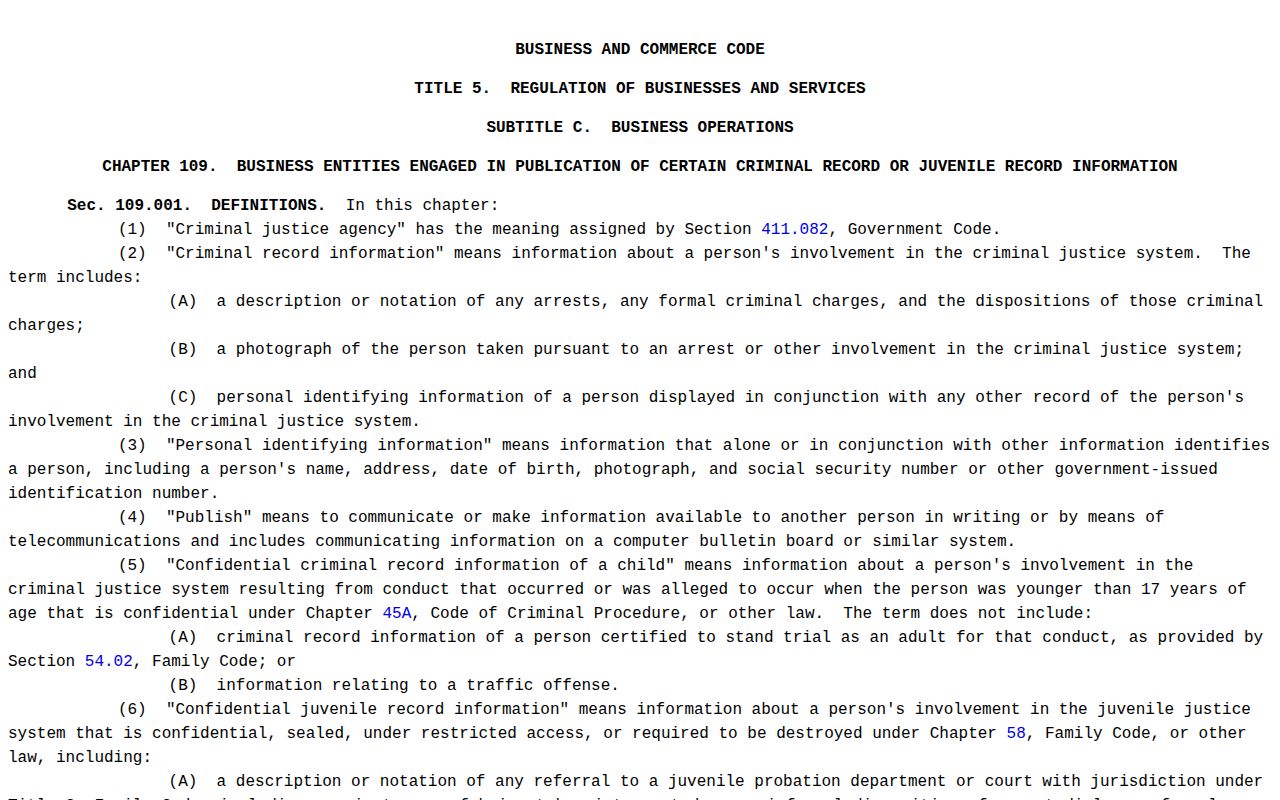
Texas law treats two situations differently. You might say a Gonzales County arrest record is wrong because it is incomplete or misspelled. Or you might insist no such record exists at all. The first is a correction request. The second is a dispute over existence. Either way, an official answer straight from the agency carries more weight than some copied entry on a third-party site.
Cleaning up a record takes one of two legal routes. Expunction erases. Nondisclosure seals. The rules live in the current Texas Code of Criminal Procedure Chapter 55A, where eligibility can hinge on timing, disposition, and other conditions. A court or a qualified lawyer can tell you whether your case qualifies. One more thing: never go hunting for a juvenile record. Chapter 109 keeps that information confidential. A proper expunction order can override the usual retention rules for records it covers.
Private sites are a different animal. If a publisher actually hosts the record on its own page, use that publisher's free correction process and nothing more. The historical Mugshots.com Gonzales County page does describe an expunction-based removal path. Still, it is private, historical, and nothing like a current sheriff roster. BustedNewspaper runs a similar form. Its Gonzales tag lumped in other counties, though. Skip any paid service that promises deletion yet will not name the source record.
How Gonzales County Busted Mugshots Are Found
What this county lacks shapes the whole search. Gonzales County publishes no online custody roster. There is no name-search tool, no bookings feed, and no jail app. So the phone is your friend. Call the jail directly. Or file a dated public-information request with the county. A blank web result proves nothing. It never means nobody was booked. Start with current jail status, then shift to the record custodian or the court once your question changes.
- Check the sheriff's jail-information page for the current official contact route.
- Call the jail with a full name and approximate date. Ask whether it can confirm current custody, a booking in the date range, a release or transfer, and the request process.
- Use the sheriff's form for a historical booking sheet or booking photo that the phone channel cannot provide.
- Search the official Gonzales County court portal for case activity and later disposition once the right person is identified.
- Use a state or federal locator only when the custody state has changed from county jail custody.
The wanted list is a separate animal. It helps when the sheriff is actively hunting a named person. But it says nothing about who sits in the jail right now. Someone listed as wanted may be miles from Gonzales County custody. For the check-and-resolve path, plus the Crime Stoppers reporting channel, see the county's Most Wanted page.
Important: A jail answer, an old booking record, a wanted entry, and a court docket each answer a different question about a case. Match the source to the question before drawing any conclusion.
Gonzales County Jail Roster Access
Gonzales County exposes no public custody portal. The sheriff's site offers no roster screen, no name field, no booking-number lookup, and nothing showing a photo, charge, date, or update time. Corrections staff do keep roster data, but they keep it internally. That matters. Say "no public online roster exists," never "the roster is empty," because those are two very different claims.
| Question | Best Gonzales County route |
|---|---|
| Is the person currently held? | Call the Gonzales County Jail and record the date and time of the answer. |
| Was there a booking during a date range? | Ask the jail what it can confirm, then file a narrow sheriff records request if needed. |
| What charge or bond was listed? | Ask the jail or custodian, then compare the answer with the court case rather than an unofficial page. |
| Is a booking photo available? | Request the exact photo from the sheriff. No public county roster photo policy was found. |
| Did the person leave county custody? | Ask whether there was release or transfer, then check another official system only when applicable. |
Who does the jail hold? The county's page lists people awaiting trial, warrant arrestees, county sentences, parole and probation holds, state-transfer cases, municipal sentences, and holds for other agencies. Confinement before trial is not a sentence. A person released on bond leaves county custody while the court case rolls on. And there is no verified county app hiding a roster or photo feed; a mobile sheriff website is simply the same site on a smaller screen.
- Booking
- The intake process after a detention facility accepts a person into custody.
- Bond
- A court-authorized condition that can affect release while a case continues.
- Disposition
- The court's later outcome, such as dismissal, acquittal, conviction, or another resolution.
- Detainer or hold
- A notice that another authority may have an interest in custody; it does not identify the ultimate outcome.
Gonzales County Busted Booking Feed Status
No official booking feed exists here. Not a same-day list, not a 24-hour or 72-hour log, not a weekly summary or downloadable file, and that holds for the sheriff plus the Gonzales, Nixon, and Waelder police departments. The sheriff's press-release archive spans the years with visible gaps, so treat it as agency news rather than a daily arrest log.
The Gonzales Inquirer fills some of the space. Its recurring law-enforcement summaries report arrests, calls, releases, court commitments, bonds, and agency totals within a dated period. Good local reporting, but still secondary; it cannot confirm current custody or a uniform photo practice. When you ask, be precise. Say whether your date is an arrest, booking, release, or transfer, and request that record type instead of "recent arrests."
Note: An unofficial page that stops showing a record does not mean the record vanished; release, transfer, legal restriction, or nonpublication can all produce the same result.
Gonzales County Arrest Report Mix
A county-only search can miss who made the arrest. Texas DPS's 2024 completeness report listed adult and juvenile arrest reports submitted by several Gonzales County agencies. Those numbers count submissions to DPS. They are not jail bookings, not a photo count, and not a crime trend. Their real value is simple: they show why the arresting agency's name belongs in any records request.
The record trail splits across agencies. The sheriff, city police, DPS, and others may each hold one piece. After a city arrest, ask two places. Get the incident record from the police department. Get the booking record from the jail. Gonzales, Nixon, and Waelder each follow a different local records path. Nixon is the odd one, since it spans two counties.
Gonzales County Busted Records Across Custody Systems
Records move between systems quietly. No new online post marks the change. A county jail answer covers county custody. Nothing more. Someone released may still have a requestable booking record on file. A person moved to state prison, federal custody, or another authority must be traced through that system instead. Remember this about every locator. Each one answers a single narrow custody question. None works as the county's general booking-photo feed.
| Custody state | What to check | Photo expectation |
|---|---|---|
| Just booked or currently in county custody | Gonzales County Jail phone and sheriff request route. | No public roster photo policy was found. |
| Released or transferred from county jail | Sheriff records request and court portal for the case. | An existing image may need a custodian response. |
| State-custody or TDCJ-covered status | TDCJ Inmate Search for location, offenses, and projected release information. | The public locator does not promise a booking-photo field. |
| Federal custody | BOP Inmate Locator for federal location and status. | No public booking-photo field is promised. |
| ICE custody or recent release | ICE Online Detainee Locator, subject to its exact-match and timing limits. | No photograph is promised. |
The official TDCJ Inmate Search is a state-custody locator, not a county arrest roster.
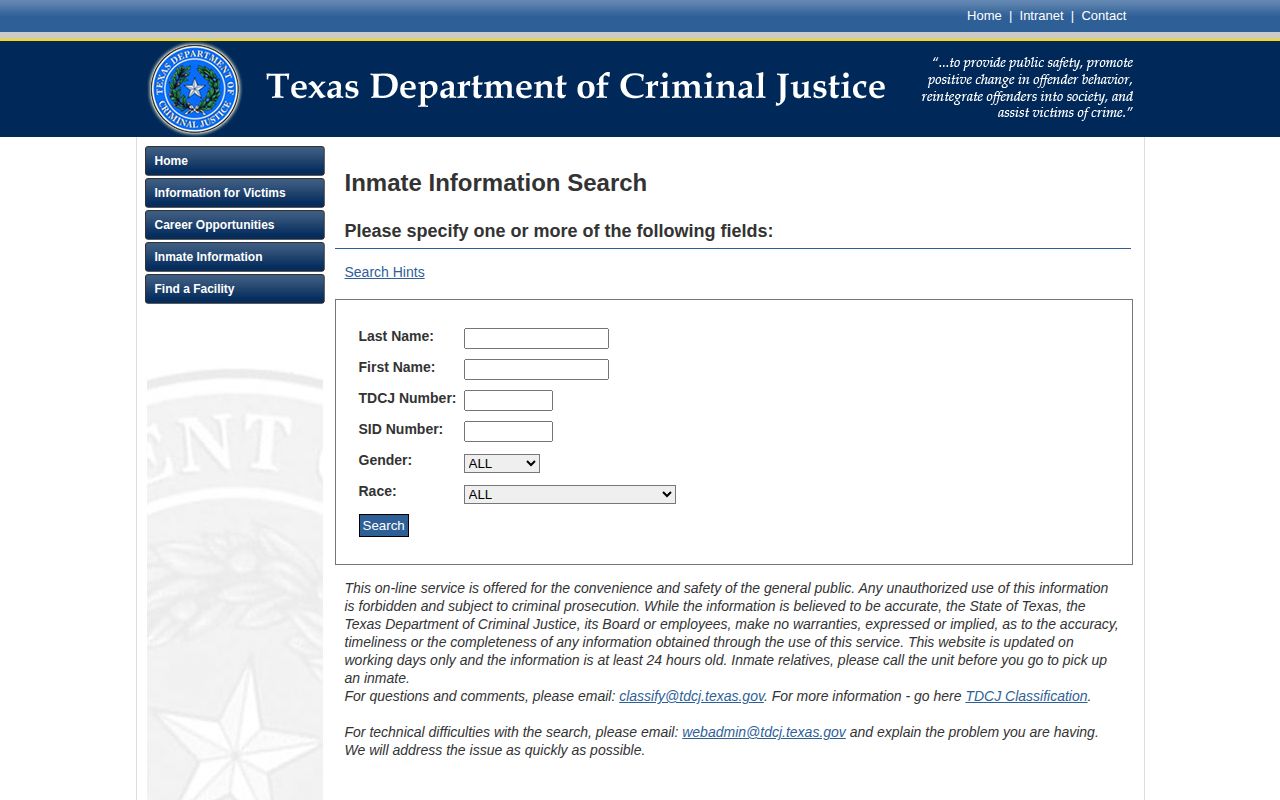
Need a record tied to TDCJ custody, or a possible image? Use the department's Public Information Request route. One caution applies. TDCJ will not hand over a county booking photo just because the person later entered state custody. And the sheriff's "other agency holds" category, on its own, establishes neither an ICE contract nor a dedicated immigration roster.
Note: A locator result names the custody system holding a person, not the full history of an arrest, booking, or court disposition.
Gonzales County Charges and Court Disposition
Want the full story on a Gonzales County case? Start with the official court portal. The jail can tell you who is in custody right now, and the newspaper can tell you what happened on a given date, but only the court file shows case activity and how things ended. Bring more than a name when you search. A case number, an agency, a date, or the exact charge wording helps you avoid pulling up the wrong person's file. The County Clerk is another useful contact for court papers and archived material.
A typical case moves through several stages. Arrest comes first, then jail booking, then a court appearance or bond, then a charging decision, and finally the court's result. The charge listed at booking rarely tells you the ending. Prosecutors can amend it, drop it, or reduce it. Only the court record shows that final outcome, so treat news stories and booking photos as early snapshots rather than the last word.
Records reminder: A Gonzales County booking record simply documents that someone was taken into custody and processed.
Gonzales County Busted Record Limits and Alerts
A few categories call for caution. Juvenile material, along with expunged or sealed records, sits outside the usual rules. No local policy publishes booking photos of minors in Gonzales County. Nothing supports hunting for one. Unsure whether a record still exists legally? Ask the records custodian directly. Retention schedules do not guarantee online access, and an expunction order can wipe material off the table entirely.
For custody alerts, Texas VINE and TDCJ IVSS fill a different need than a public search. They send eligible status notifications. They will not hand you a photo or replace a call to the jail. To report crime or point police toward a wanted person, Gonzales Crime Stoppers takes anonymous tips at 830-672-TIPS (8477) and may pay rewards under program rules. It is a tip line, not a custody checker. Emergencies still go to 911.
Gonzales County Record Archives
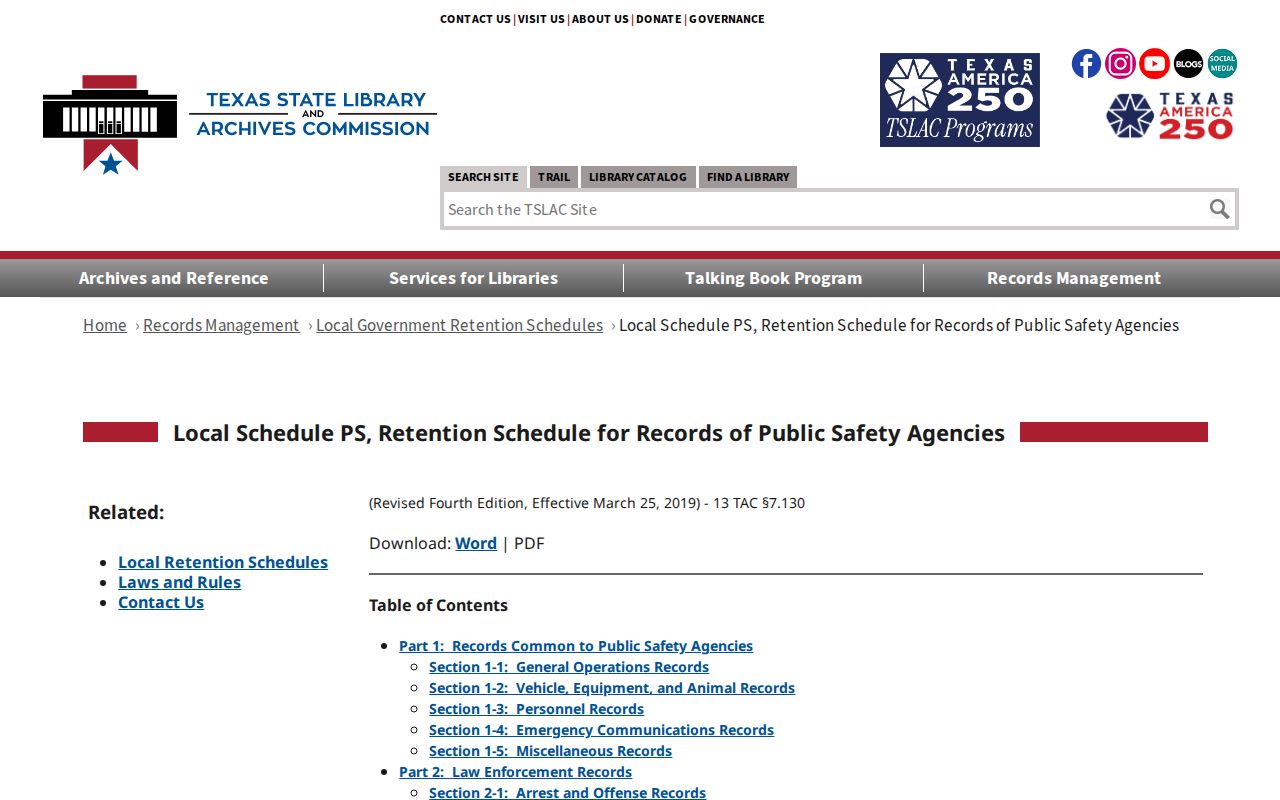
Digging for old Gonzales County records takes a different route than a modern search. Texas State Library Local Schedule PS treats county jail registers as permanent. Prisoner-incarceration papers, including booking-in and booking-out forms, are kept for about two years past release or transfer. A booking photo may live elsewhere. The schedule is a starting point, not a promise that a particular image survived or stayed public. For the item you want, the sheriff's records custodian can name the local series that holds it.
The state retention schedule adds useful context when you request an old booking record from the county.
Local history has its own keepers. The Old Gonzales County Jail now operates as a museum, and the city library keeps historic Gonzales Inquirer issues on microfilm. Both are great for historical or newspaper research. Neither serves as a modern booking-photo archive, though. For an old record, pin down the agency and the year first. Then ask whether the material was kept, moved, filmed, or destroyed under an adopted schedule.
Gonzales County Busted Mugshots by City
Each city page opens with two facts. Who made the arrest, and which jail received the person. That matters because the paper trail shifts by location. None of the three area police departments runs a confirmed daily arrest log online. There is no booking-photo feed either. In most cases the city department keeps the incident or arrest report, while the county jail takes over once a person arrives. The city pages lay out that split honestly. They do not promise a list that does not exist.
- Gonzales Busted Mugshots: Gonzales Police Department records and the county-seat booking path.
- Nixon Busted Mugshots: records guidance that accounts for Nixon's Gonzales and Wilson County boundary.
- Waelder Busted Mugshots: a small-agency records path with city and sheriff confirmation.
The Crime News & Mugshots page keeps the Gonzales Inquirer's dated reports separate from live official custody records. A name-based search has a reliable order. Go to the official source first. Request a dated copy in the middle. Check the court disposition last.